
Something I’ve learned about myself over the years is this:
When things feel hard or overwhelming, I tend to do one of two things. I either want to run away from it or control it. You know, kinda like fight or flight.
So when the daily rhythm of homeschooling (and honestly, just life) starts to feel a little heavy or monotonous, I find myself wanting to throw out the plan and go do something fun instead.
Or – I swing the other direction and want to plan everything out perfectly.
I caught myself doing it again just this morning. I was sitting here looking at planners online. Which is kind of funny, considering I design and sell my own.
Apparently I was ready to cheat on myself. 😅
Somewhere in my mind I thought, “Maybe if I just had the perfect planner, everything would feel more under control.“
And to be fair, planning does help. It gives direction. It gives clarity. It helps you think through what matters and what needs to happen.
But I’ve also learned something just as important. There comes a point where planning stops helping.
When more planning isn’t the answer
There’s a subtle shift that happens sometimes.
You’re not planning because you need clarity anymore, you’re planning because you want to feel better.
You tweak the schedule.
You rethink the curriculum.
You look for a better system.
Not because your plan is broken, but because something feels off, and you’re hoping a new plan will fix it.
I’ve been there more times than I can count.
But here’s the truth I keep coming back to. No perfect planner will make the chaos in your mind disappear.
How to know you’ve planned enough
So how do you know when it’s time to stop planning and just move forward?
You’ve probably planned enough if:
- You know what you’re using (or at least have a good idea)
- You have a basic idea of how to move forward
- You have a general rhythm for your days or weeks
- You have set up the basic foundation to make your plans functional
- You know what the next step is
- You keep revisiting your plan instead of actually using it
- You feel stuck in tweaking instead of moving forward
At that point, more planning usually isn’t the solution.
So for homeschooling, if you know what curriculum you are going to use, the basics of how to use it, and you have set up whatever things you need in place to use the curriculum (online accounts, workbooks, teacher books, etc.), then that is the foundation.
Then if you know what you want your days to look like in general, then it’s time to just move forward and take the next step. Just start!
You’ll be spinning your wheels if you sit there and tweak and obsess over your plans.

What to do instead
This is the part that sounds simple, but isn’t always easy.
Do the next thing.
Not the whole plan. Not the whole week. Not the whole year.
Just the next thing.
Sit down, open the book, do the lesson, check over the work. Move forward.
Even if it feels repetitive.
Even if it feels a little boring.
Even if the excitement has worn off.
When planning is the right step
Now to be clear, there are times when planning is exactly what you need.
If you’re feeling scattered, unsure, or like you don’t have direction, that’s a good time to step back and think things through.
That’s where tools can really help.
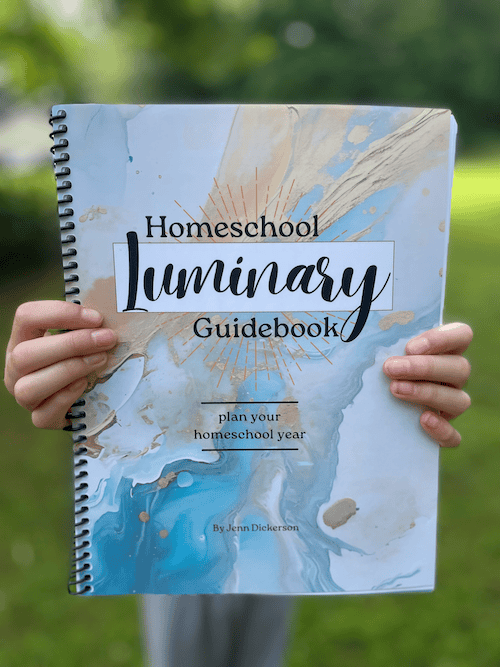
My Footpath Homeschool Planners and the Homeschool Luminary Guidebook were created for this stage! They can help you:
- Think through your year with guidance
- Get your ideas out of your head and onto paper
- Build a plan that actually works for your family
- Actually see your next steps
But even then, they’re tools. Not the solution.
The part no one talks about
At some point, every plan (no matter how good it is!) turns into daily work.
The excitement fades. The newness wears off. And it becomes… the everyday.
That doesn’t mean something is wrong. It just means you’ve reached the part where consistency matters more than creativity. Where you have to show up to make progress. Where the hard part truly starts.
It’s not pretty, and it’s not always fun. But it’s real and it’s how things get done and how kids learn.
A simple reset when you feel stuck
If you’re feeling overwhelmed or unsure what to do next, think through these questions:
- What is the very next lesson or task in front of us?
- Do I already have what I need to start? (If yes, start. If not, what’s missing?)
- What would it look like to keep this simple today?
- Can I do just 10–15 minutes and see where it goes?
That’s it.
Not everything has to be figured out today.
I have a tendency to look at the whole elephant of a task and be overwhelmed by it. But do you know the best way to eat an elephant? One bite at a time. 🤪

Do the next thing
This is something I’m working through myself right now. I can make a plan. I can think things through. In fact, I love it – planningg is the best part! All the possibilities.
But at the end of it, what I really need is not a better system. A new planner. A different curriculum.
I need to quiet my mind, and just do the next thing. And trust that the rest will become clear in time.
If you’re in a place like that too, you’re not alone in it. And you don’t have to figure everything out today.
Just take the next step.
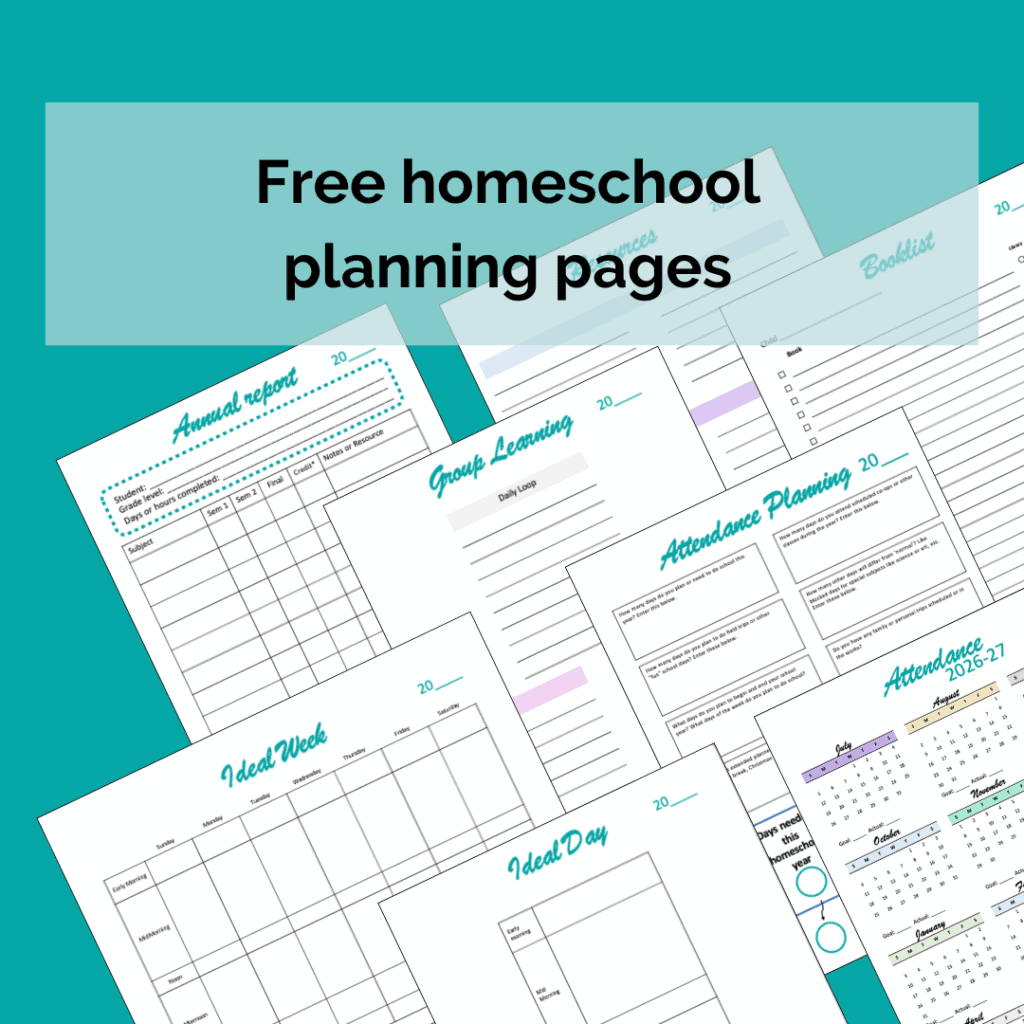
If you’d like help getting to that place of clarity in your homeschool, where you can move forward with confidence, grab my free homeschool planning pages!
For something truly laid out for you, check out my Footpath Homeschool Planners or the Homeschool Luminary Guidebook. They’re available to support you in the planning phase, and help you through your days.
But in the end, the real strength is in what you do after that. And that’s not something I can do for you. You have to show up.
Related Posts
Create a homeschool plan in 7 simple steps
Learning How to Learn: The Goal That Shapes Everything Else
The secret to homeschool success